


Root rot treatment starts by confirming that the roots are actually decaying—not simply sitting in wet potting mix. Yellowing or wilting can have several causes, so inspect the root system before cutting anything. If roots are soft, collapsing, or clearly deteriorating, remove diseased tissue, discard the old potting mix, sanitize tools and suitable reusable containers, repot viable tissue into fresh appropriate media with effective drainage, and correct excessive moisture. If little healthy tissue remains, propagation from healthy material or disposal may be more appropriate than trying to save the original plant. University of Maryland and Wisconsin Extension both emphasize root inspection, moisture management, clean media and containers, and disposal of severe cases where appropriate.
In This Article
How to Tell If Your Houseplant Actually Has Root Rot
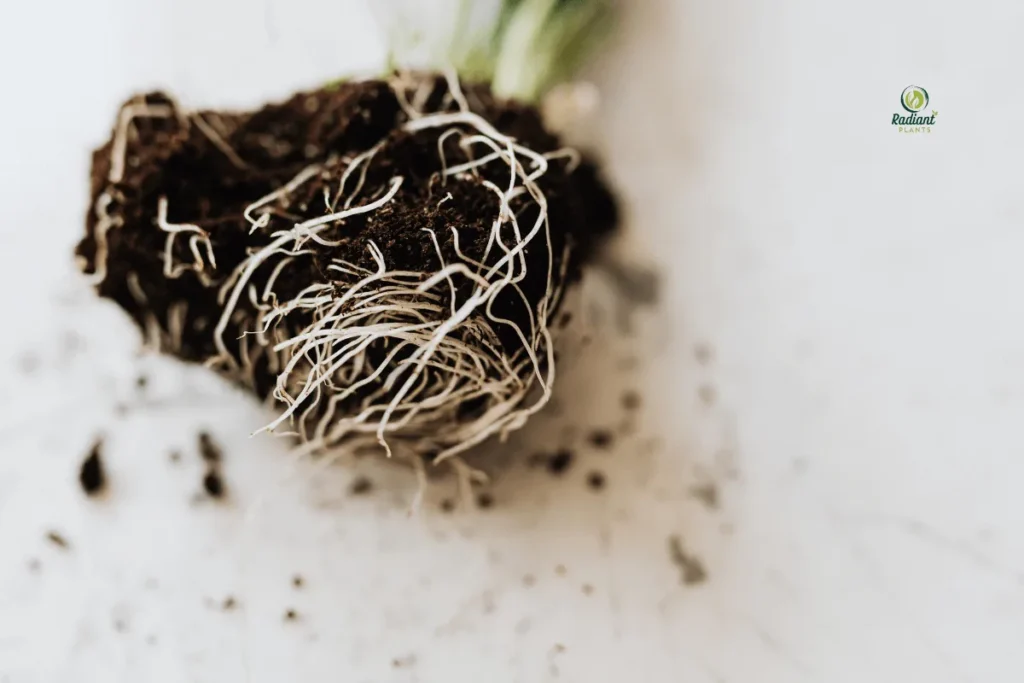
Root rot symptoms often begin above the soil line, but foliage symptoms alone are not enough to confirm the problem. Before cutting roots, repotting, or applying any treatment, inspect the root system itself.
Above-Ground Symptoms Are Clues, Not Confirmation
A houseplant with root rot may wilt even when the potting mix is still moist. Yellowing leaves, poor or stunted growth, browning, and dieback can also occur. University of Maryland Extension lists yellowing, browning, poor growth, dieback, and wilting among symptoms associated with root and crown rots, while Wisconsin Extension notes that affected plants may remain wilted despite wet soil.
Those signs should trigger a closer inspection, not an immediate diagnosis. Yellowing and wilting can occur with other plant problems, including watering stress, pests, soluble-salt injury, and other diseases. NC State Extension emphasizes that individual symptoms are rarely unique to one disease and that environmental disorders can resemble infectious plant diseases.
The practical takeaway is simple: wet soil plus yellow or wilted leaves does not, by itself, prove root rot. If the foliage looks stressed but the cause is uncertain, check the roots before moving on to root rot treatment.
Inspect the Roots Before You Treat
Carefully slide the plant out of its container and expose enough of the root system to examine its condition. University of Maryland Extension specifically recommends removing a suspected plant from its pot and observing the roots rather than relying only on above-ground symptoms.
Look for physical deterioration. Maryland describes diseased roots as dark and soft, while its root-rot guidance notes that roots affected by Pythium can become brown to black and soft or mushy. In advanced decay, the outer root tissue may pull away easily from the central core.
Wisconsin Extension also describes affected roots as soft and brown and notes that they may have an unpleasant odor. Smell can therefore support other evidence of decay, but it should not be used as a stand-alone test. The condition and integrity of the root tissue are more useful than odor alone.
A root that is firm and structurally intact is different from one that is soft, collapsing, or losing its outer tissue. That distinction is more useful for deciding whether root rot treatment is warranted than simply asking whether a root looks darker than expected.
Healthy Roots vs Rotten Roots: Do Not Judge by Color Alone
Healthy houseplant roots are commonly described as firm and relatively light-colored. University of Maryland Extension uses light-colored, firm roots as an indicator of healthy roots when diagnosing indoor plant problems.
But root color is not universal. NC State Extension specifically cautions that the normal roots of some plants are naturally dark. Its diagnostic guidance recommends looking for decay and checking whether the outer portion of a suspicious root separates easily from the central vascular core.
That makes texture and tissue integrity more informative than color by itself. A dark root is not automatically rotten, while a soft root, decaying, collapsing, or readily losing its outer tissue provides much stronger evidence that the root system has been damaged.
This distinction is especially important after overwatering. A plant that has recently sat in overly wet potting mix may be stressed without yet showing the physical root deterioration associated with root rot. Treating every dark root as diseased can lead to unnecessary root removal.
When You Cannot Identify the Exact Cause at Home
You may be able to recognize that roots are deteriorating without being able to identify the organism responsible. Root rots can involve pathogens such as Pythium, Phytophthora, Rhizoctonia, and Fusarium, but similar-looking damage does not allow a home grower to reliably determine which pathogen is present.
That distinction matters because recognizing root decay and identifying the exact disease cause are different levels of diagnosis. Wisconsin Extension cautions that very few plant diseases can be accurately diagnosed by eye and recommends laboratory examination when the precise cause needs to be determined.
For most home growers, the first decision is therefore not “Which pathogen do I have?” but “Are the roots still firm and viable, or is there clear decay?” Exact pathogen identification becomes more important when the diagnosis is uncertain or when considering a pesticide or other pathogen-specific treatment.
Root Rot or Just Overwatering? The Difference Changes What You Do Next
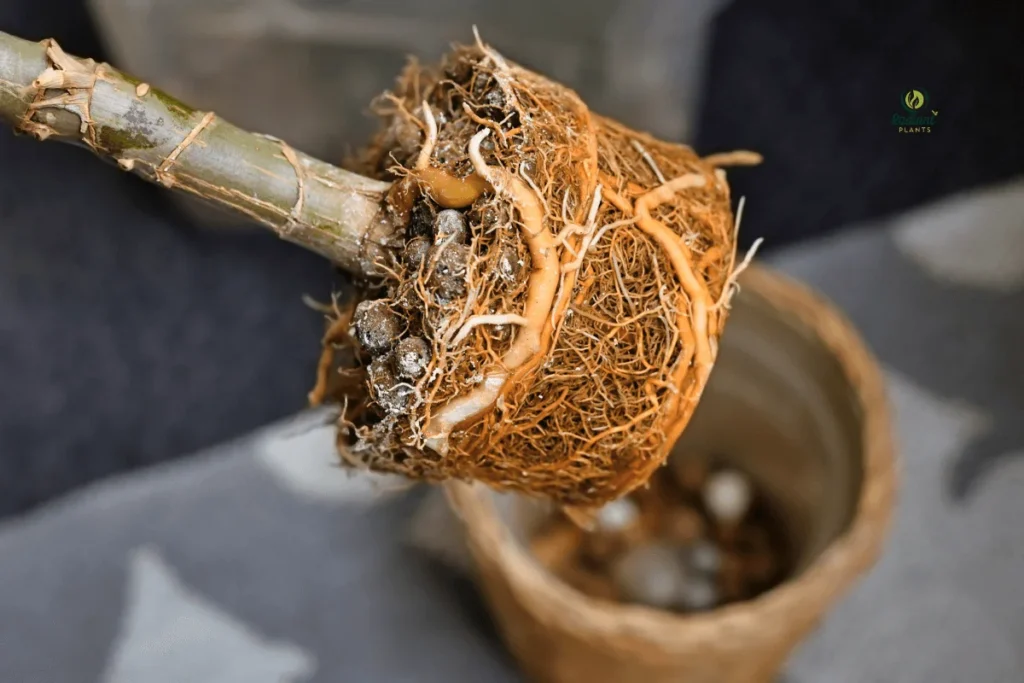
Overwatering and root rot are related, but they are not the same problem. Overwatering describes a moisture condition in the root zone, while root rot involves deterioration of root tissue associated with disease. Excessively wet conditions can favor organisms that cause root and crown rots, but wet potting mix alone does not establish that infection or tissue decay has occurred. (extension.umd.edu)
That distinction changes the appropriate response. If a plant has recently been kept too wet but its roots remain firm and structurally intact, there is no verified reason to automatically cut away healthy roots as though root rot had already been confirmed. The immediate problem may still be excess moisture rather than active root deterioration.
Likewise, yellow leaves or wilting while the soil is wet should raise concern but should not be treated as proof of root rot. University Extension diagnostic guidance emphasizes that these above-ground symptoms can occur with multiple plant problems. The condition of the roots provides the more useful dividing line between simple moisture stress and a root-rot rescue situation. (extension.umd.edu)
A practical way to think about root rot vs overwatering is:
- Wet soil + stressed foliage + firm, intact roots: correct the moisture conditions and continue monitoring rather than automatically pruning roots.
- Wet soil + soft, collapsing, or clearly decaying roots: root-rot management becomes appropriate.
- Uncertain root condition: avoid aggressive treatment until the roots have been inspected closely enough to confirm physical deterioration.
This prevents two opposite mistakes: ignoring real root decay because the problem is labeled only as “overwatering,” or damaging a stressed but still-viable root system through unnecessary pruning. The next decision should therefore be based on how much healthy tissue remains and whether rescuing the original plant is still practical.
Decide First: Rescue, Propagate, or Discard?
Once root rot is confirmed, the next question is not simply how to repot the plant. The more useful decision is whether enough healthy tissue remains to justify rescuing the original plant, whether propagation is the better option, or whether the damage is severe enough that disposal makes more sense.
There is no verified percentage of healthy roots that guarantees recovery. Instead, base the decision on whether viable, firm plant tissue remains and how extensively decay has affected the plant.
Rescue When Viable Healthy Tissue Remains
A plant may still be worth rescuing when healthy sections remain alongside the rotten tissue. University of Maryland Extension recommends removing diseased plants from their containers, cutting out rotten portions, and replanting the remaining healthy sections.
The goal is therefore selective removal, not aggressive pruning for its own sake. Retain roots and other plant tissue that remain firm and viable, while removing clearly softened or decayed portions.
Avoid rules such as “the plant can be saved if half the roots remain.” Extension guidance does not establish a universal percentage threshold, and different plants vary in their ability to recover. A more defensible question is whether enough healthy tissue remains to support a realistic rescue attempt.
Propagate When the Root System Is Lost but Healthy Propagatable Tissue Remains
Sometimes the root system is too badly damaged to preserve the plant intact, while stems or other propagatable parts remain healthy. In that situation, propagation can be an alternative to repeatedly trying to save a failing root system.
University of Maryland Extension specifically advises taking stem cuttings only from healthy tissue when managing severely affected indoor plants. Its indoor-plant diagnostic guidance also recommends rooting healthy cuttings in fresh potting media when rotten portions have been removed.
Use only tissue that shows no obvious signs of decay. The appropriate propagation method depends on the species, so this article should not prescribe one universal cutting or rooting technique. For the broader choice between the two approaches, see our plant propagation vs. repotting guide.
Discard Severely Infected Plants
Not every plant with root rot is a good candidate for rescue. University of Maryland Extension advises discarding severely infected plants, while Wisconsin Extension notes that throwing out a plant is often the most practical and cost-effective way to deal with root rot.
Disposal becomes the more reasonable option when decay is extensive and little viable plant tissue remains. Continuing to prune and repot a severely deteriorated plant may leave too little healthy material for a meaningful rescue attempt.
There is also a sanitation reason to treat a severely affected plant cautiously. Root-rot organisms can persist in contaminated potting material, and Extension guidance recommends separating infected plants from healthy ones and avoiding reuse of affected potting mix.
The decision, then, is not “Can every plant with root rot be saved?” It is which healthy tissue, if any, is still worth preserving. If viable roots remain, rescue may be appropriate. If the roots are lost but healthy propagatable tissue remains, propagation may be the better route. If severe decay has left little usable tissue, disposal is the more defensible choice.
How to Treat Root Rot When the Plant Is Salvageable
If inspection shows clear root decay but enough firm, viable tissue remains, treatment should focus on removing diseased material and correcting the conditions that favored the problem. The goal is not to apply a universal remedy; it is to preserve healthy tissue, reduce contamination, and re-establish the plant in an appropriate root environment.
1. Remove the Plant and Separate Diseased Material
Carefully remove the plant from its container and expose enough of the root system to distinguish firm, viable roots from soft or deteriorating tissue. University of Maryland Extension recommends removing affected indoor plants from their containers so rotten portions can be identified and removed. (extension.umd.edu)
Keep the affected plant and discarded material away from healthy plants while you work. Maryland’s root-rot management guidance recommends removing and separating infected plants from healthy ones, which helps reduce opportunities for contaminated potting material or plant debris to be moved through a collection. (extension.umd.edu)
Work over a surface that can be cleaned afterward rather than allowing the old potting mix and decayed roots to scatter among other houseplants.
2. Remove Rotten Root Tissue
Cut away portions that are clearly rotten, soft, or deteriorated while preserving roots and other plant tissue that remain firm and viable. Maryland Extension specifically recommends cutting out rotten portions and replanting the healthy sections that remain. (extension.umd.edu)
Do not remove healthy roots simply to reach a predetermined percentage. There is no verified universal rule that a houseplant must lose a specific proportion of its roots before it can—or cannot—recover. The extent of pruning should be determined by the condition of the tissue you can actually observe.
This also means avoiding the opposite mistake: leaving visibly decayed material attached because some healthy roots remain nearby. Selective removal is the objective—remove tissue showing clear deterioration while conserving viable portions of the root system.
3. Sanitize Tools and Decide Whether to Reuse the Pot
Anything that contacts diseased roots or contaminated potting material can become part of the cleanup process. Wisconsin Extension advises disinfecting tools and work surfaces after handling plants with root rot. It also recommends using clean containers and provides specific sanitation guidance for reusable clay pots. (hort.extension.wisc.edu)
If you reuse a container, clean and sanitize it appropriately before putting the plant back into it. A new, clean pot is another option. Container material matters: Wisconsin specifically advises against reusing plastic pots from root-rot cases because they may be difficult to disinfect adequately. (hort.extension.wisc.edu)
Disinfectants belong on appropriate tools, work surfaces, and reusable containers—not on living roots unless a reliable plant-specific treatment source explicitly instructs otherwise. Do not turn sanitation guidance into a bleach root dip or similar unverified treatment.
4. Discard the Old Potting Mix
Do not put the rescued plant back into the same potting mix. Wisconsin Extension advises against reusing potting mix from houseplants affected by root rot because it may contain organisms associated with the disease. (hort.extension.wisc.edu)
Replace it with fresh potting medium appropriate for the plant. For indoor plants, Extension guidance favors commercial, well-drained potting media rather than ordinary garden soil. University of Maryland recommends sterile potting media for root-rot management, while Wisconsin recommends pasteurized commercial potting mix and cautions that garden soil may contain root-rot organisms and may drain poorly in containers. (extension.umd.edu)
The exact mix should match the species. An orchid, succulent, and tropical foliage plant do not necessarily need the same root environment, so a single homemade soil ratio should not be presented as the correct root rot treatment for every houseplant.
5. Repot With Real Drainage
Choose a container with drainage holes so excess water can move through the potting medium and leave the root zone. Both Maryland and Wisconsin Extension identify adequate container drainage as an important part of indoor plant care and root-rot prevention. (hort.extension.wisc.edu)
Avoid automatically moving a recovering plant into a much larger pot. Wisconsin Extension notes that an oversized container can leave a large volume of moist potting medium around the roots, creating conditions favorable to root rot. (hort.extension.wisc.edu)
And do not add rocks or gravel beneath the potting mix as a supposed drainage layer. Wisconsin Extension specifically warns that rocks or gravel at the bottom of a houseplant container can actually inhibit drainage. Drainage holes and an appropriate potting medium—not a layer of stones—are the relevant measures. (hort.extension.wisc.edu)
Repot only as deeply and extensively as necessary to establish the remaining healthy root system. Routine repotting choices beyond that should be based on the needs of the particular plant.
6. Correct the Moisture Conditions
Repotting removes damaged material, but it does not solve the problem if the root zone immediately returns to excessively wet conditions. Wisconsin Extension identifies reducing soil moisture as a key step when attempting to keep a houseplant with root rot. The aim is to provide enough water for the plant’s needs without maintaining persistently wet conditions. (hort.extension.wisc.edu)
Do not replace overwatering with an arbitrary period of drought. Water requirements vary with the plant, container, potting medium, environment, and growth conditions. Judge the need for water from the plant and the moisture condition of its root zone rather than following a fixed schedule.
When you do water, allow excess water to drain through the container. For ordinary houseplants, do not leave the pot standing in accumulated drainage water; Wisconsin Extension specifically cautions against this practice because prolonged wet conditions favor root-rot organisms. (hort.extension.wisc.edu)
Successful root rot treatment therefore depends on more than cutting away bad roots. The rescued plant needs healthy tissue, fresh suitable media, effective drainage, clean growing conditions, and moisture management that fits the plant. Those changes address the conditions that can be controlled without relying on an unverified universal treatment or recovery timetable.
Root Rot Remedies That Need More Caution Than the Internet Suggests
Search for root rot treatment online and you will quickly encounter fungicides, hydrogen peroxide, cinnamon, neem oil, and drainage layers made from gravel. Some of this advice goes well beyond what Extension guidance supports for ordinary houseplants.
The core management measures with stronger support are less dramatic: remove or discard diseased material when appropriate, reduce excessive root-zone moisture, use fresh suitable potting media, maintain effective drainage, and practice good sanitation.
Fungicides Are Not a Universal Houseplant Fix
A root rot diagnosis does not automatically mean a houseplant needs a fungicide. University of Wisconsin–Madison Extension specifically states that it does not recommend chemical fungicides for controlling root rots on houseplants, citing limited product availability for home gardeners and the expense of available products.
Diagnosis also matters before any pesticide is considered. Different organisms can cause root and crown rots, and a product that is labeled for one pathogen or plant situation should not be assumed appropriate for another. Wisconsin Extension advises that proper diagnosis should come before pesticide application and stresses following the current product label exactly.
That is why this guide does not recommend copper products, propamocarb, thiophanate-methyl, or any other active ingredient as a universal root rot fungicide. A list of fungicides without a confirmed pathogen, an appropriate plant use, and label-specific directions would create false precision rather than useful treatment advice.
For a typical houseplant owner, correcting the root environment and removing diseased material where feasible are more defensible first steps than reaching automatically for a fungicide.
Hydrogen Peroxide, Cinnamon, and Neem Oil
Hydrogen peroxide, cinnamon, and neem oil are frequently promoted online as root rot remedies, often with specific dilution ratios, soaking times, or root-dip recipes. Those instructions should not be treated as interchangeable with an evidence-based treatment protocol.
For this article, no authoritative Extension evidence was identified that supports a specific hydrogen peroxide concentration, cinnamon application, or neem-oil root treatment as a standard remedy for root rot in houseplants. That does not prove that every possible use is ineffective; it means there is not enough verified support here to prescribe those treatments responsibly.
By contrast, University of Maryland Extension recommends measures such as avoiding excess water, using clean or new pots, using fresh appropriate potting media, separating infected plants, and discarding severely affected plants. Wisconsin’s houseplant root-rot guidance likewise emphasizes moisture management, drainage, uncontaminated potting mix, and sanitation. Neither protocol requires hydrogen peroxide, cinnamon, or neem oil as part of routine root rot management.
Neem products also should not be assumed to treat root rot simply because neem oil is used for other plant problems. Extension resources describe neem oil primarily in other pest-management contexts, where its use depends on the target pest and product label.
The safest conclusion is therefore narrow: do not make peroxide soaks, cinnamon dusting, or neem-oil root dips a required part of root rot treatment without reliable evidence supporting that exact use. The physical condition of the roots and the growing environment should drive the rescue plan.
Gravel Does Not Create the Drainage Fix Many Guides Claim
Putting gravel or rocks beneath the potting mix may sound like a simple way to move water away from the roots, but Wisconsin Extension specifically advises against it. Its houseplant root-rot guidance states that rocks or gravel at the bottom of a container can actually inhibit drainage.
The better approach is straightforward: use a container with drainage holes and a suitable potting medium that allows both drainage and air space around the roots. Recent Wisconsin Extension guidance likewise emphasizes bottom drainage holes and appropriate soilless container media for healthy houseplant roots.
So a gravel drainage layer should not be part of the updated root rot treatment protocol. Drainage must occur through the potting medium and out of the container—not depend on a layer of stones hidden beneath the roots.
After Treatment: Prevent the Same Conditions From Returning
Once a plant has been treated for root rot, prevention is mainly about avoiding a return to persistently wet, poorly drained conditions and preventing contaminated material from entering the root zone again. The goal is not to keep the plant permanently dry, but to match moisture and container conditions to what the plant can actually use.
Stop Watering by Calendar
A fixed schedule such as “once a week” is not a reliable way to prevent root rot. University of Maryland Extension notes that indoor-plant water needs change with factors such as plant type, container, environmental conditions, and season, so watering should be based on the condition of the root zone rather than a universal timetable. (extension.umd.edu)
After a root-rot rescue, check the potting medium before watering again instead of automatically watering because a certain number of days has passed. This is especially important when the remaining root system is smaller than it was before treatment and may use water differently.
The practical rule is to respond to actual moisture conditions and the needs of the species, not to a weekly or monthly calendar.
Keep the Root Zone Drained but Not Chronically Dry
Effective drainage helps prevent excess water from remaining around the roots. Use a container with drainage holes and allow water to move through the potting medium and out of the pot. Wisconsin Extension also advises against leaving ordinary houseplants standing in accumulated drainage water. (hort.extension.wisc.edu)
Good drainage does not mean withholding water indefinitely. Houseplants still require adequate moisture, and their needs vary considerably. Replacing chronic overwatering with chronic drought can create a different form of stress.
The better approach is a cycle appropriate to the plant: water when the root-zone moisture indicates that water is needed, allow excess water to escape, and avoid keeping the potting medium continuously saturated.
Match the Container to the Remaining Root System
Pot size matters after damaged roots have been removed. A substantially reduced root system placed into an unnecessarily large container can be surrounded by more wet potting medium than it can use efficiently.
Wisconsin Extension cautions that oversized pots can hold excess soil and moisture around roots, creating conditions favorable to root rot. (hort.extension.wisc.edu)
Choose a container that reasonably accommodates the healthy roots that remain rather than automatically moving a recovering plant into a larger pot. The objective is adequate room for recovery without creating a large reservoir of persistently wet media.
Avoid Reintroducing Contaminated Material
Do not reuse the potting mix removed from a root-rot case. Wisconsin Extension notes that old potting material from affected plants may contain organisms associated with root rot and recommends using fresh potting mix instead. (hort.extension.wisc.edu)
Tools, work surfaces, and reusable containers that contacted diseased roots or old potting material should also be cleaned and appropriately sanitized before reuse. University of Maryland Extension similarly recommends using clean or new pots and separating infected plants from healthy ones during disease management. (extension.umd.edu)
New plants deserve attention as well. Maryland Extension recommends inspecting plants before bringing them into an indoor collection and separating plants showing disease symptoms. (extension.umd.edu)
For root rot prevention, the most important pattern is consistent: fresh suitable media, appropriate container size, effective drainage, clean materials, and watering based on the plant’s actual moisture needs rather than a rigid schedule.
Effective root rot treatment begins with the diagnosis, not the remedy. Confirm physical root deterioration before pruning, preserve viable tissue where possible, replace contaminated potting material, restore effective drainage, and correct the moisture conditions that contributed to the problem. When the root system is too badly damaged, propagating healthy tissue or discarding the plant can be a better decision than repeatedly trying to rescue what remains.
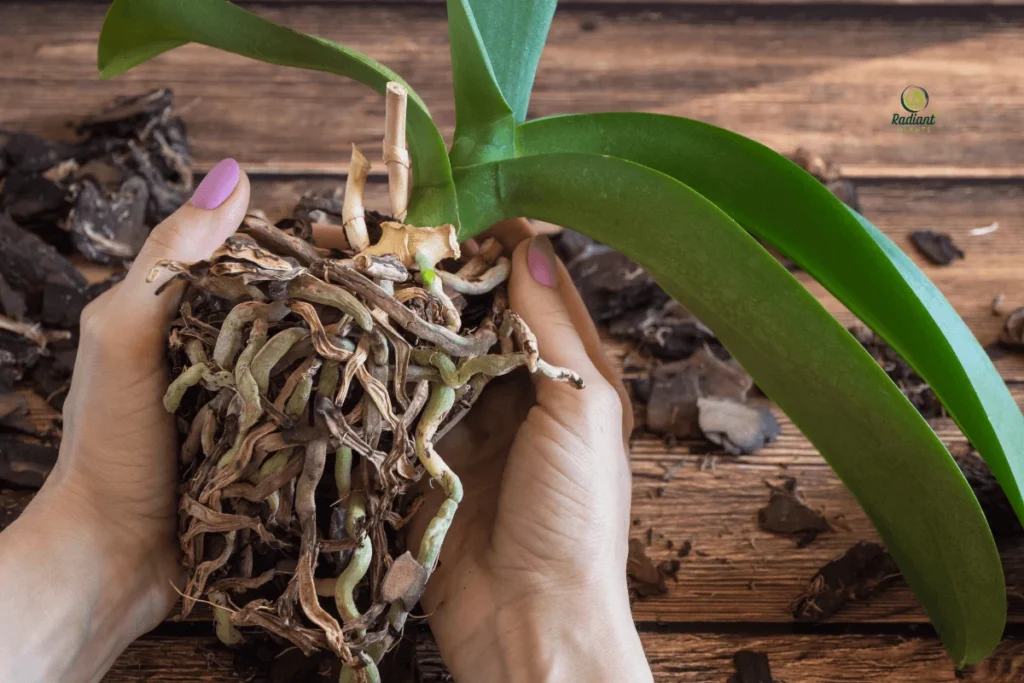
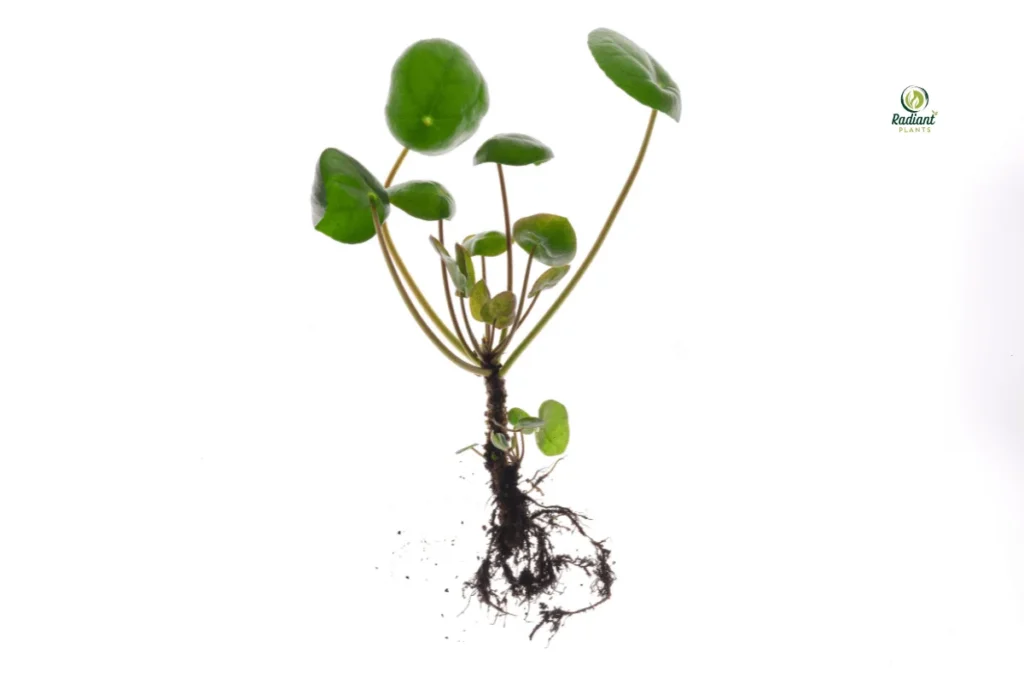



Thanks for sharing. I read many of your blog posts, cool, your blog is very good.